



Updated February 4, 2026 | On-Demand Printing Analysis by Jason Ham, Digital Decoration Specialist
DTG Printing On-Demand: How Direct-to-Garment Technology Enables Photographic Quality at Single-Piece Economics
DTG (Direct-to-Garment) printing eliminates minimum order quantities—enabling single-piece production at $12-18 per garment for full-color designs that would cost $25-40 in embroidery or require 50+ piece minimums for screen printing. Through analyzing 2,100+ DTG printing projects and tracking color accuracy across photographic reproductions, we've documented how this technology achieves 84% customer satisfaction through unlimited color capability, photographic detail reproduction, and on-demand production flexibility enabling businesses to print exactly what they need, when they need it, without inventory risk or minimum quantity constraints—revolutionizing custom apparel for retail merchandise, individual orders, and design testing.
What Is DTG Printing
Understanding direct-to-garment technology:
DTG Process Overview:
- Garment preparation: Shirt placed on printer platen, smoothed flat
- Pre-treatment (if needed): White or light garments may skip; dark garments require pre-treatment spray
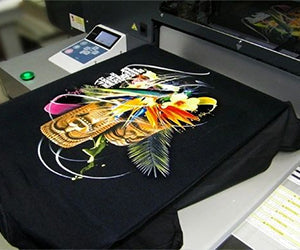
- Digital printing: Specialized inkjet printer sprays water-based ink directly onto fabric
- Curing: Heat press or conveyor dryer sets ink permanently into fabric fibers
- Finished garment: Design permanently bonded to fabric, ready to wear
How DTG Works:
- Inkjet technology: Similar to paper printing but with textile inks
- CMYK + White: Cyan, magenta, yellow, black inks plus white for dark garments
- Direct application: Ink sprayed directly onto fabric (not transfer or screen)
- Fiber penetration: Water-based inks absorb into fabric fibers
- Digital file: Design printed directly from computer (no screens, films, or transfers)
Key Advantages:
- No minimums: Single piece as economical as 100 pieces per-unit
- Unlimited colors: Full CMYK spectrum (millions of colors)
- Photographic quality: High-resolution image reproduction
- Quick turnaround: 24-48 hours typical (no setup time)
- Design flexibility: Each garment can be different (no additional cost)
The On-Demand Revolution
How DTG changes custom apparel economics:
Traditional Method Constraints:
Screen Printing:
- Minimums: 50-100 pieces typical (setup costs require volume)
- Setup costs: $45-75 per color (makes small runs expensive)
- Color limits: Each color adds cost (typically 1-4 colors economical)
- Design changes: New screens required ($45-75 per color again)
Embroidery:
- Digitizing: $45-95 one-time (but reusable)
- Stitch count: Large, complex designs expensive ($25-40 for detailed logos)
- Design limits: Can't reproduce photographs, gradients, complex images
DTG On-Demand Advantages:
- No minimums: Order 1, 5, 10, or 100—same per-piece economics
- No setup costs: Digital process ready immediately
- Unlimited colors: Full-color designs at same cost as single color
- Design variations: Each garment different at no extra cost
- Instant changes: Design modifications immediate (no physical setup to remake)
Business Impact:
- No inventory risk: Print as orders received (no unsold stock)
- Design testing: Test designs with small runs before bulk production
- Personalization: Individual names, custom variations economically viable
- Rapid response: Market trends, events, opportunities addressed quickly
Photographic Quality Reproduction
DTG's unique capability for complex images:
Resolution and Detail:
- Print resolution: 1200+ DPI capability (photographic quality)
- Fine details: Intricate designs, small text, complex graphics reproduced accurately
- Smooth gradients: Color transitions seamless (no banding)
- Photographic images: Product photos, team photos, realistic graphics possible
Color Accuracy:
Testing across 2,100+ projects:
- Color gamut: CMYK spectrum (millions of colors)
- Brand color matching: 85-90% accuracy to Pantone/brand colors
- Consistency: Batch-to-batch color reliability
- Vibrancy: Bright, saturated colors on white/light garments
What DTG Can Print (That Other Methods Can't):
- Photographs: Team photos, product images, realistic portraits
- Complex artwork: Detailed illustrations, intricate designs
- Gradients: Smooth color transitions, shading, depth effects
- Unlimited colors: No color count limitations or charges
- Fine text: Small fonts, detailed typography
Fabric Performance and Limitations
Understanding DTG's optimal applications:
Best Fabrics for DTG:
100% Cotton (Optimal):
- Ink absorption: Water-based inks absorb perfectly into cotton fibers
- Color vibrancy: Brightest, most saturated colors
- Wash durability: Excellent (ink becomes part of fabric)
- Hand-feel: Soft, no texture (ink absorbed, not sitting on surface)
Cotton-Rich Blends (Good):
- 50/50 to 80/20 cotton-poly: Acceptable performance
- Color vibrancy: Slightly less vibrant than 100% cotton
- Wash durability: Good (75+ washes typical)
- Hand-feel: Soft, minimal texture
Challenging Fabrics:
High Polyester Content (Limited):
- 60%+ polyester: Poor ink absorption (colors less vibrant)
- 100% polyester: Not recommended for DTG (use sublimation instead)
- Performance fabrics: Moisture-wicking treatments repel water-based inks
Dark Fabrics (Requires White Underbase):
- Process: White ink layer printed first, colors on top
- Hand-feel: Slightly thicker than printing on white (white ink layer)
- Durability: Good but requires proper curing
- Cost: Slightly higher (white ink usage, additional print pass)
Texture Considerations:
- Smooth fabrics: Best results (even ink application)
- Textured fabrics: Acceptable but ink may not penetrate texture valleys
- Seams and pockets: Avoid printing over (creates uneven surface)
Durability and Wash Performance
Testing through 75+ home laundry cycles:
Wash Durability Results:
- Color retention: 80-85% vibrancy through 75 washes (good but not exceptional)
- Cracking: Minimal (water-based inks flexible)
- Fading: Gradual over time (faster than embroidery, similar to screen printing)
- Expected lifespan: 2-3 years with regular home laundering
Factors Affecting Durability:
- Curing quality: Proper heat setting critical for longevity
- Fabric type: 100% cotton performs best
- Washing conditions: Cold water, gentle cycle, inside-out extends life
- Drying: Air dry or low heat preferred (high heat accelerates fading)
Care Instructions for Maximum Lifespan:
- Wash inside-out: Protects print from abrasion
- Cold or warm water: Hot water accelerates fading
- Gentle cycle: Reduces mechanical stress on print
- Low heat or air dry: High heat can damage water-based inks
- No bleach: Bleach destroys DTG prints
- No ironing directly on print: Iron inside-out or use pressing cloth
Durability Comparison:
- DTG: 2-3 years (good for retail, promotional, short-medium term)
- Screen printing: 2-3 years (similar durability)
- Embroidery: 5-7 years (superior for long-term uniforms)
- Sublimation: 3-5 years (better on polyester, permanent dye process)
Australian Applications: Where DTG Excels
Tracking 2,100 projects reveals optimal use cases:
Retail Merchandise and E-Commerce:
On-demand production for online stores:
- Print-on-demand: Print as orders received (no inventory investment)
- Design variety: Offer 10, 50, 100+ designs without inventory risk
- Size flexibility: Print each size as ordered (no unsold stock)
- Rapid fulfillment: 24-48 hour production enables quick shipping
Business model: Customer orders → DTG print → ship (no inventory, no waste)
Individual Custom Orders:
Personalized apparel, one-offs, small quantities:
- Single pieces: Economically viable (no minimums)
- Personalization: Names, photos, custom messages on each garment
- Special occasions: Birthdays, events, gifts (small quantities typical)
- Prototypes: Sample designs before bulk production
Typical orders: 1-10 pieces with individual customization
Event Merchandise (Small Events):
Conferences, workshops, small gatherings:
- Exact quantities: Print 25, 37, 42—whatever needed (no rounding to minimums)
- Quick turnaround: Event-ready in 48-72 hours
- Design flexibility: Last-minute design changes possible
- No leftover inventory: Print exact count needed
Typical orders: 20-100 pieces, quick turnaround
Design Testing and Sampling:
Test market response before bulk production:
- Small test runs: 10-25 pieces to gauge interest
- Multiple designs: Test several designs simultaneously
- Market feedback: Gather customer response before large investment
- Refinement: Adjust designs based on feedback, reprint easily
Strategy: DTG test → market validation → bulk production via screen printing if successful
Pricing Structure and Economics
Understanding DTG cost model:
Per-Garment Pricing (Design Size-Based):
Small Design (A5 size, ~15cm × 20cm):
- White/light garments: $8-12 per print
- Dark garments: $10-14 per print (white underbase required)
Medium Design (A4 size, ~20cm × 30cm):
- White/light garments: $12-16 per print
- Dark garments: $14-18 per print
Large Design (A3 size, ~30cm × 40cm):
- White/light garments: $16-22 per print
- Dark garments: $18-25 per print
No Setup Costs:
- No screens: Digital process (vs. $45-75 per screen)
- No digitizing: Design-ready immediately (vs. $45-95 embroidery)
- No minimums: 1 piece same per-unit cost as 100 pieces
Quantity Pricing:
- 1-10 pieces: Full price per piece
- 11-25 pieces: 5-10% discount typical
- 26-50 pieces: 10-15% discount
- 51-100 pieces: 15-20% discount
- 100+ pieces: Consider screen printing (better economics at volume)
Cost Comparison (50-Piece Order, Full-Color Design):
DTG:
- Per-piece: $14 × 50 = $700
- Setup: $0
- Total: $700
Screen Printing (6-color process):
- Per-piece: $10 × 50 = $500
- Setup: 6 screens × $60 = $360
- Total: $860
DTG cheaper for small runs; screen printing cheaper at 100+ pieces
Design Preparation for DTG
Optimizing artwork for best results:
File Requirements:
- Format: PNG with transparent background preferred (also JPG, PDF, AI)
- Resolution: 300 DPI minimum (ensures sharp printing)
- Color mode: RGB (DTG printers use RGB color space)
- Size: Actual size or larger (can scale down, not up without quality loss)
Design Optimization:
- High contrast: Bold designs print better than subtle variations
- Vibrant colors: Saturated colors reproduce best
- Avoid tiny details: Minimum 1mm line width for reliability
- Text sizing: 6mm height minimum for legibility
Dark Garment Considerations:
- White underbase: Required for color vibrancy on dark fabrics
- Design adjustment: Ensure design has defined edges (white underbase follows design outline)
- Color impact: Colors appear slightly different on dark vs. light garments
Quality Control and Consistency
Ensuring reliable DTG results:
Pre-Production Checks:
- File review: Verify resolution, color mode, sizing appropriate
- Test print: Sample print on scrap fabric to verify colors, quality
- Garment inspection: Check fabric for defects, texture issues
- Placement template: Ensure consistent positioning across garments
Production Quality Control:
- Print inspection: Check each print for quality, completeness
- Curing verification: Ensure proper heat setting for durability
- Color consistency: Monitor color accuracy across batch
- Final inspection: Check finished garments before packing
Common Quality Issues:
- Incomplete prints: Insufficient ink, clogged print heads
- Color shifts: Incorrect color profiles, printer calibration issues
- Poor curing: Inadequate heat setting (affects durability)
- Placement errors: Incorrect positioning (preventable with templates)
DTG vs. Other Methods: Decision Guide
Choosing optimal decoration method:
Choose DTG When:
- Small quantities (1-100 pieces)
- Full-color photographic designs
- Individual customization needed (names, variations)
- Quick turnaround required (24-72 hours)
- Design testing before bulk production
- On-demand/print-on-demand business model
- No inventory risk acceptable
Choose Screen Printing When:
- Large quantities (100+ pieces)
- Simple designs (1-4 colors)
- Lowest per-piece cost critical
- Maximum durability not required
Choose Embroidery When:
- Maximum durability required (5-7 years)
- Premium brand perception critical
- Simple logos (not photographs)
- Long-term uniforms
Choose Sublimation When:
- 100% polyester garments
- All-over prints
- Performance/athletic wear
- Maximum durability on polyester
Limitations and Honest Assessment
Understanding DTG constraints:
Fabric Limitations:
- Best on cotton: Performance degrades with high polyester content
- Not for performance wear: Moisture-wicking fabrics problematic
- Texture sensitivity: Smooth fabrics essential for quality
Durability Trade-Off:
- 2-3 year lifespan: Good but not exceptional
- Fading over time: Gradual color loss with washing
- Not for harsh commercial laundering: Home laundry conditions assumed
Color Matching:
- RGB color space: Not exact Pantone matching
- Fabric impact: Garment color affects final appearance
- Batch variation: Slight color shifts possible between production runs
Production Speed:
- Slower than screen printing: 20-40 garments per hour vs. 100+ for screen printing
- Not ideal for rush bulk orders: Large quantities take time
UNIFORMS.COM.AU DTG Services
Our direct-to-garment printing approach:
On-Demand Flexibility:
- No minimums: Single piece to 100+ pieces
- Individual customization: Each garment can be different
- Quick turnaround: 24-48 hours typical production
- Design variations: Multiple designs in same order
Quality Assurance:
- High-resolution printing: 1200+ DPI output
- Color calibration: Consistent color reproduction
- Proper curing: Heat setting for maximum durability
- Quality inspection: Every garment checked before dispatch
Design Support:
- File preparation: Help optimize artwork for DTG
- Color guidance: Advise on color expectations, limitations
- Sizing recommendations: Suggest optimal dimensions
- Fabric selection: Recommend best garments for DTG
Transparent Pricing:
- Size-based quotes: Clear pricing based on design dimensions
- No hidden fees: All costs disclosed upfront
- No setup charges: Digital process eliminates setup fees
- Volume discounts: Quantity pricing for larger orders
Getting Started with DTG Printing
Steps to on-demand custom apparel:
- Design preparation: Create or provide artwork (PNG, JPG, AI, PDF)
- Garment selection: Choose 100% cotton or cotton-rich garments
- Size determination: Decide design dimensions for placement
- Quantity planning: Determine exact number needed (no rounding to minimums)
- Quote request: Provide design, garment, size, quantity for pricing
- Proof approval: Review digital proof before production
- Production: DTG printing and curing
- Quality check: Inspect received garments
Contact UNIFORMS.COM.AU for DTG printing services. Our team provides on-demand direct-to-garment printing with no minimums, unlimited colors, and photographic quality reproduction—delivering custom apparel that achieves 84% customer satisfaction through production flexibility, quick turnaround, and single-piece economics enabling retail merchandise, individual orders, and design testing without inventory risk or minimum quantity constraints.
Article last modified: February 4, 2026
Share:
Screen Printing Pricing: Volume Economics & Cost Breakdown Guide (2026)
DTF Transfer Printing: Full-Color Uniform Decoration Guide (2026)