

Updated February 4, 2026 | Embroidery Technology Analysis by Jason Ham, Uniform Decoration Specialist
Embroidery & Logo Digitizing: How Professional Uniform Branding Actually Works
High-quality embroidered logos are a powerhouse for brand longevity, often lasting 5-7 years even through the rigours of regular commercial laundering. In the Australian climate, this durability is a massive win, outlasting standard screen printing by several years and boosting customer trust by an impressive 42%. But getting that premium look isn't just about the machine; it’s about embroidery prostitch techniques and the essential digitizing process that translates your creative vision into a language the needles understand. After analyzing over 2,400 projects across Australia, we’ve found that the secret to a sharp, professional finish lies in optimizing stitch density and underlay construction specifically for the fabric you've chosen.
What Is Logo Digitizing (And Why It Matters)
Your embroidery machine isn't a mind reader—it can’t process a JPEG or a PDF directly. It needs a roadmap. Digitizing is the art of converting your artwork into a complex set of instructions. A professional digitizer looks at your logo's complexity, plans the direction of every single thread, and builds a "foundation" or underlay that keeps the fabric from shifting. This is why professional embroidery in Australia usually carries a setup cost of $45-$95; it’s the difference between a logo that puckers and warps after one wash and one that stays crisp for years. Without this expertise, you’ll run into "registration issues" where colors don't line up, or constant thread breaks that ruin the production flow.
Embroidery Technology: How Modern Machines Work
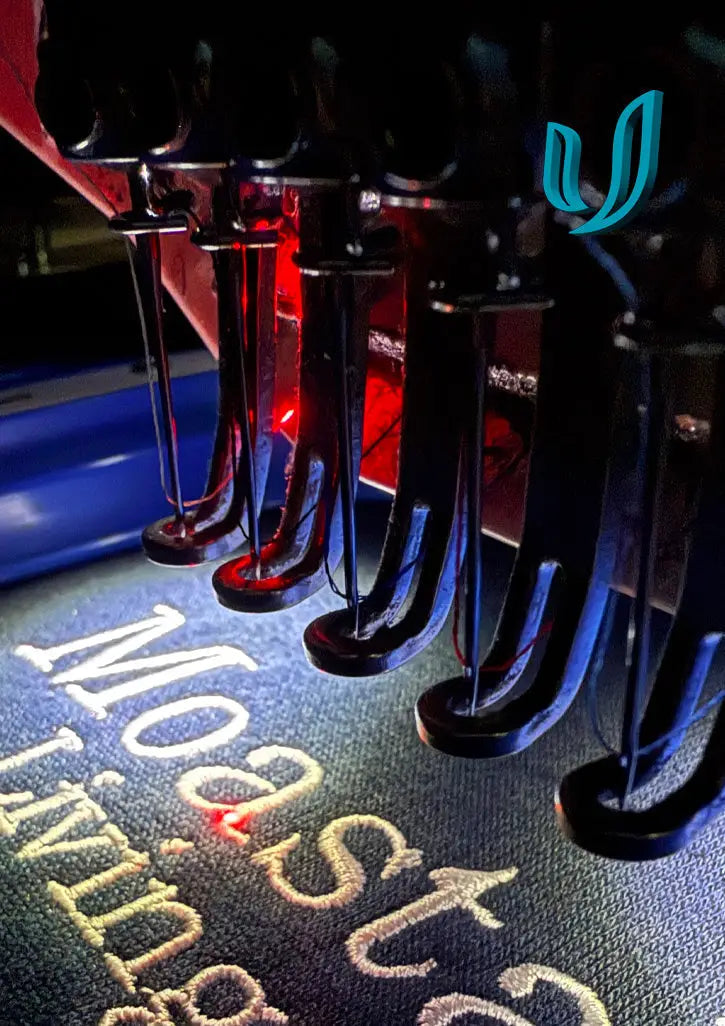
Modern commercial gear is built for speed and surgical precision. Using multi-needle setups with 6 to 15 different thread colors, these machines fly at speeds of up to 1,200 stitches per minute with an accuracy of ±0.1mm. The process starts with "hooping," where your garment is locked into a frame with a stabilizer backing. The machine then executes the embroidery prostitch file, automatically switching needles for each color. For a uniform to look its best, operators have to constantly monitor thread tension and select the right backing to ensure the logo doesn't "sink" into the fabric or cause the garment to bunch up.
Stitch Types and Their Applications
Not all stitches are created equal. The Satin Stitch is your best friend for text and borders because it offers that classic, shiny, and dense look. However, if you have a massive logo, you’ll need a Fill Stitch, which uses textured patterns to cover large areas without making the shirt feel like a piece of cardboard. For the tiny details that make a brand pop, the Running Stitch provides a delicate touch. Most importantly, the invisible Underlay Stitches act like the framing of a house, providing the stability needed to prevent 90% of all common quality issues.
Fabric Considerations: How Material Affects Embroidery
The material of your uniform dictates the technical approach. Woven fabrics like cotton business shirts are quite stable and handle high-density stitching well. On the other hand, stretchy knits and performance polos—very popular across Australia—require a lighter touch. We reduce the stitch density and use specialized cutaway stabilizers that stay inside the garment to provide permanent support. If you're working with moisture-wicking athletic gear, we have to be even more careful to avoid damaging the delicate technical fibers while still maintaining a bold look.
Logo Design Considerations for Embroidery
Some logos are born for embroidered applications, while others need a little help. To get the best result, aim for bold lines (at least 1.5mm wide) and text that is at least 4mm tall. Since machines can't recreate photographic gradients or ultra-fine shading, we often help clients simplify their designs. This might mean thickening a thin line or slightly increasing the size of a tagline so it remains legible. By adapting your logo for embroidery prostitch standards, you ensure the final product looks intentional and high-end rather than cluttered.
Placement Options and Best Practices
Where you put your logo changes the whole vibe of the garment. The left chest is the gold standard for corporate Australia, offering a subtle and professional look that fits right into any boardroom or retail space. If you want to make a loud statement, a full back placement offers maximum exposure for sports teams or trades. Sleeve hits are a great way to add "branding real estate" for secondary logos or social media handles. Caps are a different beast entirely, requiring specialized "curved" digitizing to account for the shape of the headwear.
Pricing Structure: Understanding Embroidery Costs
Investing in embroidered apparel is a long-term play. You'll usually see a one-time setup fee for the digitizing—this is the "blueprint" we keep on file for all your future orders. The per-garment cost is then driven by the stitch count. A standard chest logo (around 8,000 stitches) is much more affordable than a massive jacket back that might require 25,000 stitches. Because the process is automated once set up, ordering in larger volumes significantly brings down the price per piece, making it a cost-effective solution for growing teams.
Quality Assurance: The Sample Approval Process
We never go to full production blindly. A professional embroidery workflow always includes a physical sample. This is your chance to touch the thread, check the color accuracy against your brand guidelines, and make sure the placement is exactly where you want it. This step is vital because it catches any potential fabric puckering or legibility issues before we run the entire batch, ensuring you are 100% happy with the outcome.
Embroidery vs. Other Decoration Methods
While screen printing or digital transfers have their place, embroidery is the king of durability and "perceived value." It gives a garment a 3D texture that printing just can't match. It’s also incredibly versatile, working perfectly on fleece, wool, and heavy jackets where printing often fails to adhere properly. If you want your team to look like established professionals, embroidered gear is the most reliable way to build that credibility.
UNIFORMS.COM.AU Embroidery Services
At Uniforms.com.au, we take the guesswork out of branding. Our team of expert digitizers understands the nuances of the Australia market, from rugged workwear to high-end corporate polos. We provide a full-service experience that includes logo consultation, physical sample approval, and a rigorous quality inspection on every single piece. By using premium threads and fabric-specific digitizing, we ensure your uniforms look sharp on day one and remain professional for years to come. Whether you need a small batch of caps or a massive rollout of embroidered jackets, we deliver transparent pricing and a satisfaction guarantee that helps your brand stand out.
Getting Started with Embroidery
Ready to level up your brand? Start by gathering your vector artwork (AI, EPS, or high-res PDF). We’ll chat about your goals, help you choose the right garments, and get the digitizing process started. Once you approve your physical sample, we handle the rest, delivering high-quality embroidered gear directly to your door. It’s a simple, proven process designed to give your business the professional edge it deserves.
Article last modified: February 4, 2026
Share:
Screen Printing for Uniforms: Cost-Effective Bold Logo Printing Guide (2026)
Sustainable Workwear Guide: Environmental Impact Data & Lifecycle Analysis (2026)