

Updated February 4, 2026 | Minimum Order Quantity Analysis by UNIFORMS.COM.AU
Minimum Order Quantities: Understanding MOQs for Decoration, Bulk Ordering, and Custom Apparel
Minimum order quantities (MOQs) vary significantly across decoration methods and product types—understanding these requirements enables cost-effective purchasing decisions. Screen printing typically requires 50-100 pieces for cost-effectiveness (setup costs amortize over volume), embroidery often has no minimums (digital process enables single-piece orders), and custom manufacturing requires 100-500+ pieces (tooling, production setup costs). Through analyzing MOQ structures across decoration methods, product categories, and supplier types, we've documented how proper MOQ understanding achieves optimal purchasing: avoiding unnecessary minimums (choosing methods matching quantity needs), maximizing cost-efficiency (selecting appropriate decoration for order size), and planning procurement (understanding quantity requirements for custom projects)—making MOQ knowledge critical for team uniforms, promotional merchandise, and custom apparel procurement.
Understanding Minimum Order Quantities
Why MOQs exist and how they work:
What MOQs Are:
- Definition: Minimum quantity supplier requires for order, production run, or decoration method
- Purpose: Cover setup costs, production efficiency, economic viability
- Variation: Different MOQs for different products, methods, suppliers
- Negotiability: Sometimes flexible based on relationship, circumstances
Why MOQs Exist:
- Setup costs: Screen printing screens, embroidery digitizing, production tooling require minimum volume to justify
- Production efficiency: Manufacturing runs more efficient at certain quantities
- Economic viability: Suppliers need minimum order value to cover costs, make profit
- Inventory management: Minimum quantities support efficient inventory, fulfillment
Types of MOQs:
- Per-order minimums: Minimum total order value or quantity
- Per-design minimums: Minimum quantity per design, color, decoration
- Per-product minimums: Minimum quantity for specific products (custom items, specialty products)
- Decoration minimums: Minimum quantities for specific decoration methods
Decoration Method MOQs
Minimum quantities across branding methods:
Embroidery (Typically No Minimum):
- MOQ: Often 1 piece (digital process enables single-piece orders)
- Why: Digitizing one-time cost ($45-95), reusable for future orders
- Cost structure: Setup + per-piece (economical even at small quantities)
- Best for: Small orders, individual items, ongoing needs with reorders
Example: 5 embroidered polos economically viable ($45 digitizing + $10 per piece = $95 total, $19 per polo)
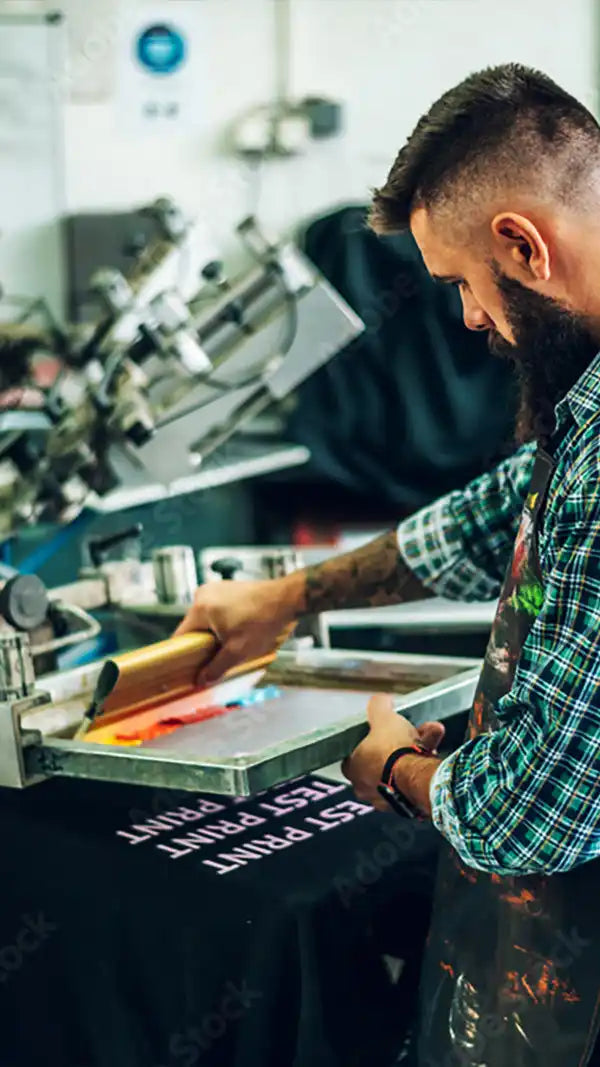
Screen Printing (50-100 Piece Minimum Typical):
- MOQ: 50-100 pieces typical for cost-effectiveness
- Why: Screen setup costs ($45-75 per color) require volume to amortize
- Cost structure: Setup + per-piece (setup expensive, per-piece cheap at volume)
- Best for: Bulk orders, team uniforms, promotional merchandise
Example: 50 screen printed tees ($120 setup + $6 per piece = $420 total, $8.40 per tee)
DTF - Direct to Film (10-25 Piece Minimum Typical):
- MOQ: 10-25 pieces typical (some suppliers 1 piece)
- Why: Digital process, no setup costs, but transfer creation has minimums
- Cost structure: Per-piece pricing (no setup), economical at moderate quantities
- Best for: Small to medium runs, full-color designs, individual customization
Example: 20 DTF printed shirts ($10 per piece = $200 total, $10 per shirt)
DTG - Direct to Garment (Often No Minimum):
- MOQ: 1 piece typical (digital printing process)
- Why: No setup costs, digital process enables on-demand printing
- Cost structure: Per-piece pricing ($12-18), no setup fees
- Best for: Very small runs, individual orders, on-demand printing
Example: 5 DTG printed tees ($15 per piece = $75 total, $15 per tee)
Sublimation (25-50 Piece Minimum Typical):
- MOQ: 25-50 pieces typical
- Why: Transfer paper setup, production efficiency at moderate volume
- Cost structure: Setup + per-piece (economical at 25+ pieces)
- Best for: Polyester garments, all-over prints, sports uniforms
Product Category MOQs
Minimum quantities across product types:
Stock Garments (No Minimum Typical):
- MOQ: 1 piece typical for in-stock items
- Why: Supplier maintains inventory, no production setup required
- Examples: Standard polos, tees, work pants, jackets from major brands
- Availability: Immediate shipping, no production wait
Decorated Stock Garments (Varies by Method):
- MOQ: Depends on decoration method (see decoration MOQs above)
- Why: Decoration method determines minimum (embroidery 1 piece, screen printing 50-100)
- Examples: Stock polos with embroidered logo, stock tees with screen printing
Custom Headwear (20-50 Piece Minimum Typical):
- MOQ: 20-50 pieces typical for custom caps, beanies
- Why: Embroidery setup, cap production efficiency, supplier minimums
- Examples: Custom embroidered caps, team beanies, branded headwear
- Cost: $12-25 per cap including embroidery at minimum quantities
Fully Custom Manufactured Products (100-500+ Pieces):
- MOQ: 100-500+ pieces typical (varies significantly)
- Why: Tooling costs, production setup, manufacturing efficiency requires volume
- Examples: Custom-designed uniforms, fully custom apparel, unique products
- Timeline: 6-12 weeks typical (sampling, production, shipping)
Supplier Type MOQs
How supplier models affect minimums:
Retail/E-Commerce Suppliers (Low/No Minimums):
- MOQ: Often 1 piece for stock items
- Model: Maintain inventory, serve small orders
- Pricing: Higher per-piece (retail pricing)
- Best for: Small quantities, immediate needs, individual orders
Wholesale Suppliers (Moderate Minimums):
- MOQ: 10-50 pieces typical per style/color
- Model: Bulk sales, volume discounts
- Pricing: Lower per-piece (wholesale pricing)
- Best for: Medium quantities, team orders, business procurement
Manufacturers (High Minimums):
- MOQ: 100-1,000+ pieces typical
- Model: Production runs, manufacturing efficiency
- Pricing: Lowest per-piece (factory direct)
- Best for: Large quantities, custom manufacturing, ongoing programs
Decoration Specialists (Method-Specific Minimums):
- MOQ: Varies by decoration method (see decoration MOQs)
- Model: Specialized in specific decoration methods
- Pricing: Competitive for their specialty method
- Best for: Specific decoration needs, quality decoration priority
Cost Impact of MOQs
How minimums affect total investment:
Below Minimum Scenarios:
Example: Need 25 screen printed shirts (below 50-piece minimum)
- Option 1: Pay minimum anyway (order 50, use 25) = $420 total, $16.80 per needed shirt
- Option 2: Choose different method (DTF 25 pieces) = $250 total, $10 per shirt ✓ BETTER
- Option 3: Wait, consolidate with future needs to reach minimum
At Minimum Scenarios:
Example: Need exactly 50 screen printed shirts
- Screen printing: $420 total ($8.40 per shirt) ✓ COST-EFFECTIVE
- DTF alternative: $500 total ($10 per shirt)
- Embroidery alternative: $750 total ($15 per shirt)
Above Minimum Scenarios:
Example: Need 200 screen printed shirts
- Screen printing: $1,020 total ($5.10 per shirt) ✓ BEST VALUE
- DTF alternative: $1,800 total ($9 per shirt)
- Volume advantage: Setup costs amortized, per-piece costs drop
Strategies for Managing MOQs
Optimizing procurement with minimum quantity requirements:
Match Method to Quantity:
- Small orders (1-25): Choose embroidery, DTG, or DTF (low/no minimums)
- Medium orders (25-100): DTF or screen printing (depending on design complexity)
- Large orders (100+): Screen printing (best cost-efficiency at volume)
Consolidate Orders:
- Combine needs: Multiple departments, locations, timeframes into single order
- Reach minimums: Consolidation achieves MOQs, unlocks volume pricing
- Plan ahead: Anticipate future needs, order together
- Coordinate: Work with other teams to combine orders
Choose Flexible Suppliers:
- Low-minimum suppliers: For small, ongoing needs
- Multiple suppliers: Different suppliers for different quantity needs
- Relationship building: Long-term relationships may enable MOQ flexibility
Plan for Growth:
- Order ahead: If growing, order at minimums anticipating future needs
- Storage consideration: Ensure adequate storage for minimum quantities
- Shelf life: Consider product shelf life, style changes when ordering ahead
Negotiating MOQs
When and how minimums might be flexible:
Situations Enabling MOQ Flexibility:
- Established relationships: Long-term customers may get MOQ exceptions
- Slow periods: Suppliers may accept smaller orders during slow times
- Trial orders: First-time orders to test products, quality
- Ongoing commitments: Promise of regular future orders
- Partial minimums: Willing to pay setup costs on smaller quantities
Negotiation Approaches:
- Explain situation: Communicate why below minimum (trial, budget, timing)
- Offer premium: Willing to pay higher per-piece for below-minimum order
- Future commitment: Indicate larger future orders if trial successful
- Relationship building: Position as start of long-term relationship
When MOQs Are Firm:
- Manufacturing minimums: Production setup costs make small runs uneconomical
- Custom products: Tooling, development costs require minimum volume
- Specialty items: Unique products with high setup costs
- Peak periods: Busy times reduce supplier flexibility
UNIFORMS.COM.AU MOQ Approach
Our flexible minimum order structure:
Stock Garments:
- MOQ: No minimum on most stock items
- Availability: 1 piece orders accepted for in-stock products
- Range: 10,000+ products available without minimums
- Shipping: Orders ship regardless of quantity
Embroidery:
- MOQ: No minimum (1 piece orders accepted)
- Digitizing: One-time $45-95 fee (reusable for future orders)
- Per-piece: $8-15 depending on stitch count, complexity
- Flexibility: Economical even at very small quantities
Screen Printing:
- MOQ: 10 pieces minimum per design/color (lower than industry standard 50-100)
- Why lower: Flexible approach supporting small businesses, teams
- Cost-effective: 50+ pieces recommended for best pricing
- Setup: $45-75 per color
DTF Printing:
- MOQ: 10 pieces typical
- Flexibility: Full-color designs at moderate quantities
- Pricing: $8-14 per garment (size-based)
- Best for: 10-500 piece orders with complex designs
Custom Headwear:
- MOQ: 20 pieces typical for custom embroidered caps
- Why: Embroidery setup, supplier minimums
- Pricing: $12-25 per cap including embroidery
- Options: Various cap styles, colors, embroidery options
Flexible Approach:
- Customer focus: Lower minimums than industry standard where possible
- Method guidance: Recommend optimal decoration for your quantity
- Consolidation help: Assist combining orders to reach cost-effective quantities
- Transparent pricing: Clear communication about MOQs, pricing at different quantities
Contact UNIFORMS.COM.AU for minimum order quantity guidance. Our team provides flexible MOQ options with no minimums on stock garments, no minimums on embroidery, and lower-than-industry minimums on screen printing (10 pieces vs. typical 50-100)—delivering accessible custom apparel solutions for small businesses, teams, and organizations requiring quality decoration at any quantity.
Article last modified: February 4, 2026


Share:
Vinyl Heat Transfer for Small Orders: Performance Testing & Cost Analysis (2026)
Are Polo Shirts Business Casual? The Complete Workplace Guide for Australian Businesses